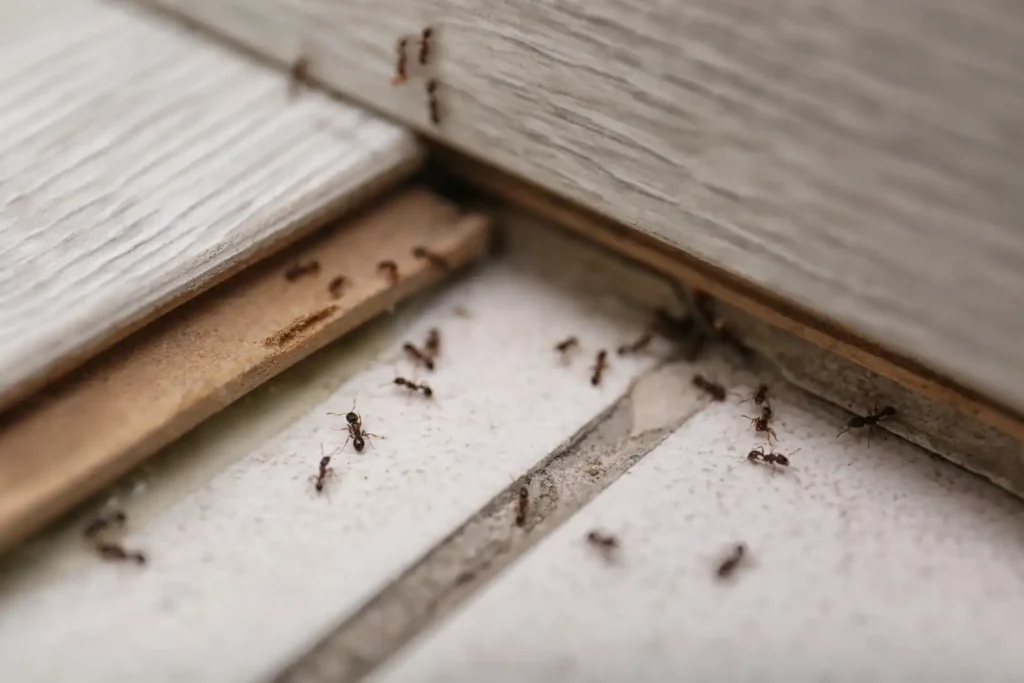
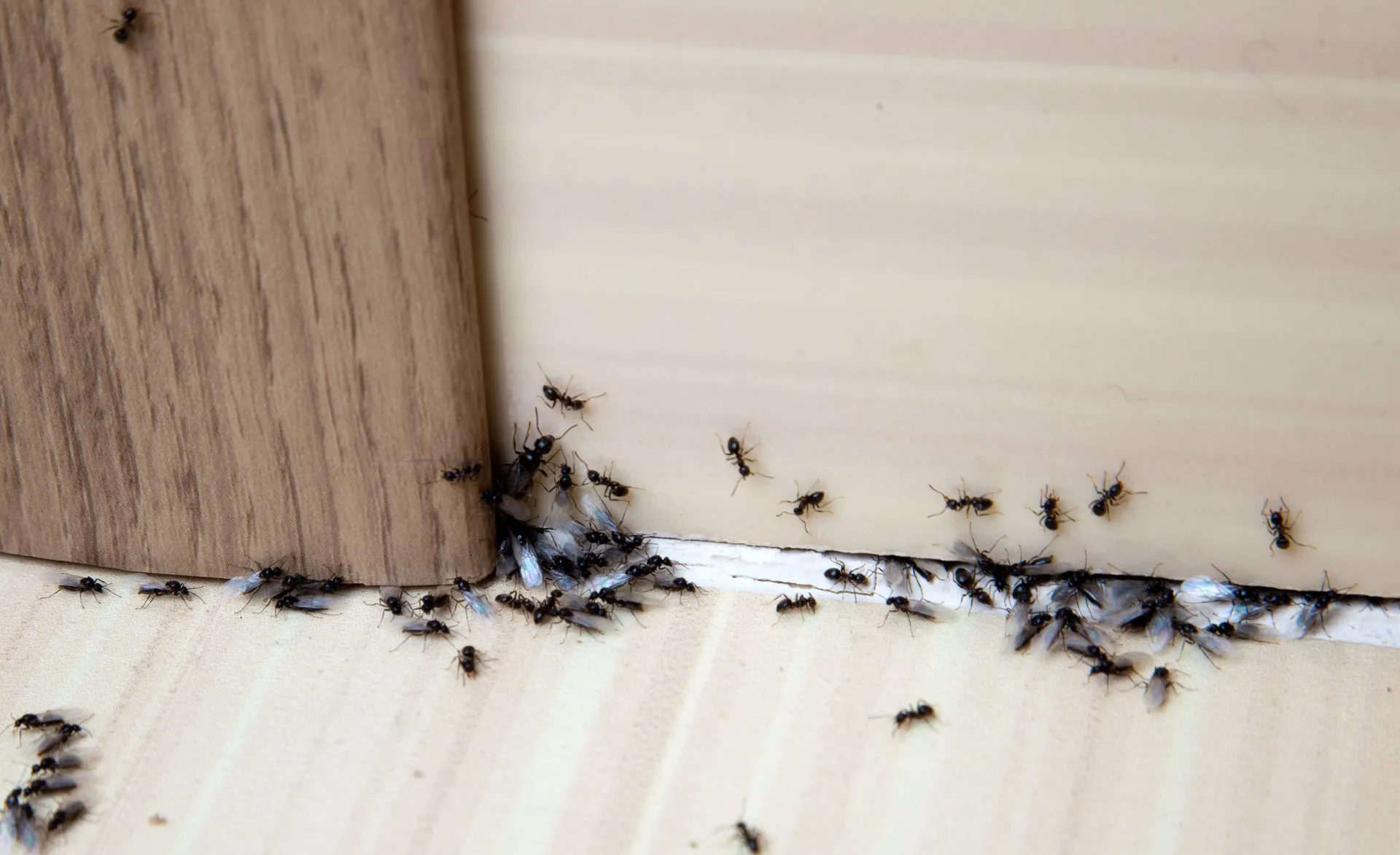
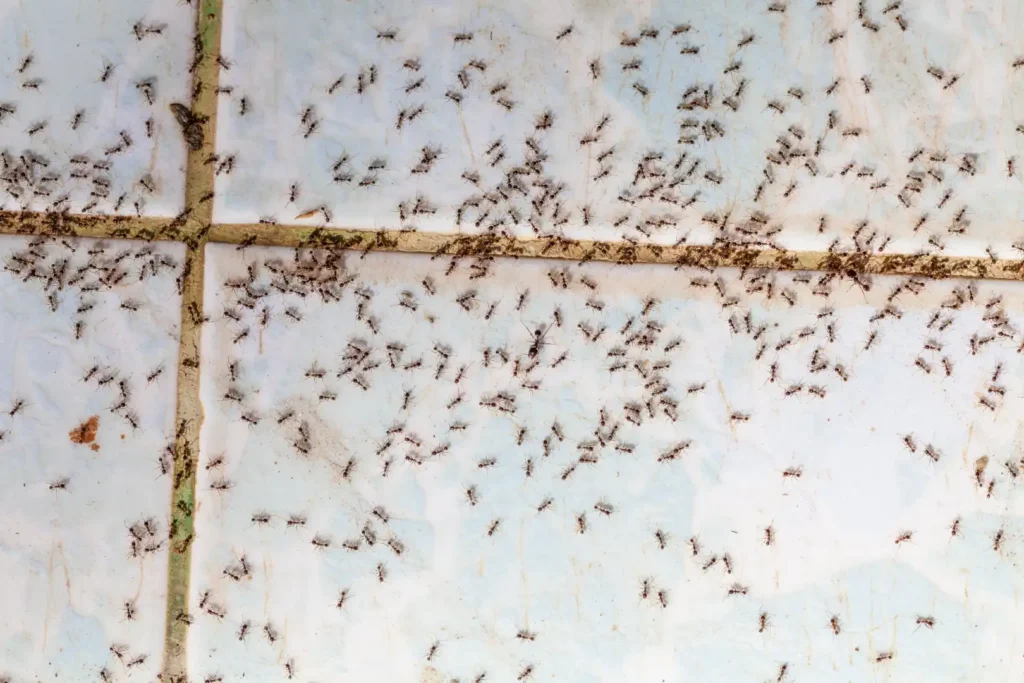
During the warmer months, ants become more active as they search for food, water, and shelter, leading them directly into your home. At first, you may only have a few pests on your kitchen counter, but without action, you could quickly have a full-blown summer ant infestation.
Below, we will discuss why exactly ants enter your house during this season and give tips on how to avoid dealing with an established colony.
Why Are Ants More Active in the Summer?
Ants are cold-blooded insects, meaning their activity levels and metabolism increase as the temperatures warm up. Spring marks the beginning of colony expansion, but summer is when worker ants are most actively searching for resources to support growing ant populations and new nesting sites.
Additionally, increased outdoor activities create more food opportunities around homes, dry conditions may drive ants indoors in search of water, and summer storms can flood outdoor nests, forcing ants to relocate — possibly into your house.
All these factors make summer the peak season for many common household ant species.
Why Ants Come Inside
Ants don’t enter homes randomly. They follow basic survival instincts.
Food Sources
Crumbs, sticky spills, pet food, open pantry items, and garbage provide an easy meal. Even tiny amounts of sugar or grease can attract scouting ants.
Once a scout finds food, it leaves behind a pheromone trail that guides other ants directly to the source, which is why long lines of ants seem to appear overnight.
Water Sources
During hot, dry weather, ants actively seek moisture. Kitchens, bathrooms, laundry rooms, basements, leaking pipes, and even window condensation can attract thirsty colonies.
Shelter
Your home offers protection from extreme temperatures, predators, and changing weather conditions. Small foundation cracks, door gaps, utility penetrations, and damaged weather stripping provide easy entry points.
Common Summer Ant Species
While many types of ants become active during summer, homeowners frequently encounter:
Odorous House Ants — These tiny brown or black ants are attracted to sweets and emit a distinct rotten coconut smell when crushed.
Pavement Ants — Pavement ants often nest beneath sidewalks, driveways, and foundations and invade kitchens searching for food.
Carpenter Ants — Unlike termites, carpenter ants do not eat wood, but they hollow it out to build nests. Their presence may indicate moisture problems or water-damaged wood that should be addressed promptly.
Pharaoh Ants — These small, yellow ants commonly infest apartments, hospitals, and commercial buildings. They are hard to eliminate because disturbing a colony only causes it to split into more colonies.
Signs You Have an Ant Problem
Early detection makes treatment much easier. Watch for signs, such as:
- Trails of ants traveling to and from food sources
- Small piles of dirt or debris near cracks
- Winged ants inside your home
- Ants consistently appear in the same locations
- Rustling sounds inside walls (possible carpenter ants)
- Small piles of sawdust near wood structures.
If ants continue returning after cleaning, you likely have an active colony nearby.
How to Prevent Summer Ant Invasions
Prevention is the most effective way to reduce your chances of an infestation.
Keep Food Sealed — Store pantry items in airtight containers and avoid leaving food uncovered. Clean countertops after preparing meals and promptly wipe up spills.
Eliminate Moisture — Repair leaking faucets, pipes, and appliances, and use dehumidifiers in damp basements or crawl spaces if necessary.
Seal Entry Points — Inspect your home’s exterior for cracks around windows, doors, foundations, and utility lines. Seal openings with caulk and replace worn weather stripping.
Clean Regularly — Vacuum frequently, especially in kitchens and dining areas, and clean under appliances where crumbs often accumulate.
Manage Outdoor Areas — Trim shrubs and tree branches away from your home to reduce natural bridges ants can use to enter, and avoid stacking firewood directly against your house.
Store Trash Properly — Use trash cans with tight-fitting lids and empty indoor garbage regularly.
When to Call a Professional Pest Control Company
Many homeowners reach for store-bought sprays or ant baits, but while these products may reduce visible activity, they often fail to eliminate the source of the problem. They may even make the infestation harder to control.
Professional pest control technicians know how to identify the ant species invading your home, locate nesting areas, and develop a treatment strategy that efficiently and safely targets the entire colony — not just the worker ants.
Keep Ants Outside Where They Belong
Summer ant invasions are common, but they don’t have to become a recurring problem. By reducing food and water sources, sealing entry points, and addressing infestations early, you can significantly lower the risk of ants taking over your home.
But if you’re seeing repeated ant activity despite your best efforts, contact Gem State Pest Solutions for effective, long-lasting solutions that eliminate the colony at its source and help you enjoy a pest-free summer with confidence.